
Core Traits of Machiavellianism: From Strategic Manipulation to Emotional Detachment
In 2016, a mid-level manager at a European financial firm was passed over for promotion three times in…
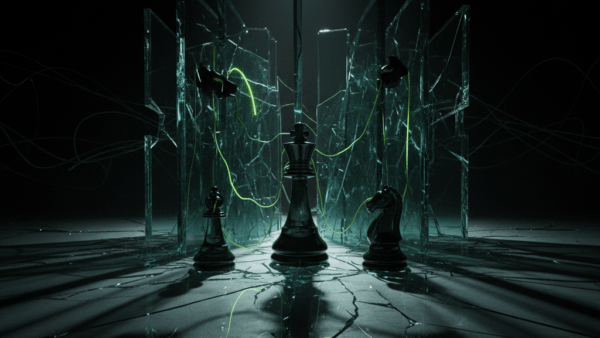
Among the three core Dark Triad personality traits — narcissism, psychopathy, and Machiavellianism — the latter is perhaps the most strategic, the most calculating, and the most difficult to detect. Unlike the narcissist who craves admiration or the psychopath who may act impulsively out of cruelty, the Machiavellian is a cold, pragmatic strategist. They view the world as a chessboard, other people as pawns, and morality as an inconvenience to be discarded when it no longer serves their goals.
Understanding Machiavellianism is essential for recognizing those who manipulate not out of emotion, not out of grandiosity, but out of a detached, calculated desire for control, status, and advantage. These individuals are often highly successful, socially skilled, and utterly ruthless beneath a charming exterior.
Machiavellianism is a personality trait characterized by interpersonal manipulation, cynicism, callousness, and a strategic, calculating approach to social interactions. The term derives from Niccolò Machiavelli, the Renaissance political philosopher whose book The Prince advised rulers to use deceit, cruelty, and manipulation to maintain power — famously arguing that “the ends justify the means.”
In psychology, Machiavellianism was first systematically studied by Richard Christie and Florence Geis in the 1970s. They developed the Mach-IV scale, a questionnaire that measures a person’s tendency to endorse manipulative, cynical, and amoral beliefs. High Machiavellians (or “high Machs”) consistently demonstrate:
A cynical view of human nature (people are inherently weak, gullible, and self-serving)
A willingness to manipulate others for personal gain
A focus on outcomes rather than ethical processes
Emotional detachment in social relationships
A preference for tactical, long-term planning over impulsive action
Unlike psychopathy, which involves significant impulsivity and emotional poverty, Machiavellianism is characterized by controlled emotional detachment. Unlike narcissism, which craves admiration, Machiavellianism seeks effective control — whether or not that control comes with applause.
The Machiavellian is not a chaotic manipulator. They plan, observe, and execute with precision. They study their targets, identify vulnerabilities, and deploy tactics only when the likelihood of success is high. They are patient — willing to wait months or years for the right moment to exploit a relationship or situation.
High Machs do not allow emotions to interfere with their calculations. They can feign warmth, empathy, or outrage when useful, but they do not feel these emotions deeply. This detachment allows them to make cold, rational decisions that would cause psychological distress in most people — such as betraying a loyal friend, discarding a partner who is no longer useful, or lying without flinching.
Machiavellians believe that everyone is essentially selfish, manipulative, or stupid. They project their own traits onto others, assuming that everyone else is also playing strategic games. This cynicism serves two purposes: it justifies their own manipulation (“everyone does it”) and prevents them from being surprised when others betray them (though they are often surprised when someone acts with genuine integrity).
High Machs do not reject morality entirely — they treat it as a tool. Honesty, loyalty, and fairness are behaviors to be displayed when they serve a purpose and discarded when they do not. A Machiavellian may be scrupulously honest in one context to build trust, then lie shamelessly in another context to gain advantage. Morality is not a constraint; it is a performance.
Unlike psychopaths, who may seek immediate gratification, Machiavellians are willing to delay rewards. They will invest time in building relationships, cultivating reputations, and playing the “long game” if the eventual payoff justifies the effort. This makes them particularly dangerous in corporate, political, and institutional settings where patience is rewarded.
High Machs are not driven by emotional urges. They do not explode in rage, reveal their plans prematurely, or take unnecessary risks. Their control over impulse allows them to maintain charming, composed exteriors even while planning betrayals.
The Machiavellian mind operates like a cold, efficient algorithm. Every social interaction is evaluated in terms of costs, benefits, risks, and opportunities.
Before manipulating, the Machiavellian gathers intelligence. They ask seemingly innocent questions, observe reactions, and note weaknesses: fears, desires, secrets, insecurities, and social connections. This information is stored for future use.
Machiavellians are not rigid. If one approach fails, they quickly pivot to another. They are skilled at reading social situations and adapting their strategies in real time. This flexibility makes them difficult to predict or counter.
High Machs carefully cultivate their public persona. They may present as helpful, loyal, or even vulnerable — whatever the situation requires. Their charm is not spontaneous warmth but a calculated performance designed to lower your defenses.
Unlike the psychopath who may derive pleasure from cruelty, the Machiavellian does not typically enjoy harming others. They simply do not care. Exploitation is a means to an end. If treating you kindly serves their goals, they will treat you kindly. If destroying you serves their goals, they will destroy you without hesitation and without malice. This lack of emotional investment makes their cruelty particularly bewildering to victims.
| Dimension | Machiavellianism | Narcissism | Psychopathy |
|---|---|---|---|
| Primary motivation | Strategic control, outcomes | Admiration, validation | Dominance, stimulation |
| Emotional style | Detached, controlled | Grandiose or vulnerable | Shallow, impulsive |
| Impulsivity | Low (patient, strategic) | Moderate | High (reckless) |
| Response to criticism | Calculated (may pretend to accept) | Rage or shame | Indifference or aggression |
| Social presentation | Charming, adaptable, “normal” | Boastful, entitled | Charismatic but volatile |
| Long-term planning | Excellent | Poor to moderate | Poor |
| Sadism | Rare (cruelty is instrumental) | Occasional | Common (can be pleasurable) |
High Machs are not rare monsters. Research suggests that Machiavellianism exists on a spectrum, with approximately 3-5% of the population scoring significantly high. They are found in every sector:
Corporate environments: The executive who takes credit for others’ work, sabotages rivals, and manipulates metrics while maintaining a polished reputation.
Politics: The candidate who says whatever is necessary to win, breaks promises without consequence, and views constituents as votes rather than people.
Romantic relationships: The partner who feigns love, extracts resources or emotional labor, and discards without guilt when a better option appears.
Friendships: The “friend” who keeps score of favors, leverages your secrets, and disappears when you are no longer useful.
Unlike narcissists, Machiavellians do not typically broadcast their traits. Look for these patterns:
Inconsistent values: They profess loyalty, honesty, or compassion — but their actions consistently contradict these values when convenient.
Strategic disclosure: They share personal information not out of vulnerability but to create obligation or extract your secrets.
“Useful” relationships: Their social circle changes based on utility. Friends who lose status or resources are quietly discarded.
Calm during conflict: While others become emotional, the Machiavellian remains eerily composed, calculating angles even during arguments.
Puzzling betrayals: They may betray long-term allies for seemingly small gains, revealing that their loyalty was never genuine.
Machiavellians are expert performers. Ignore their promises, professions of loyalty, or emotional displays. Observe what they do over time, especially when they think no one is watching.
Do not share your fears, insecurities, secrets, or strategic plans with someone you suspect is Machiavellian. Information is ammunition.
Machiavellians control information flows. Fact-check their claims through independent sources. Ask others for their perspectives.
Machiavellians are most dangerous in private, where their charm can operate without witnesses. Conduct important conversations in groups or documented formats (email, recorded meetings where legal).
High Machs do not play by normal social rules. Stop expecting them to feel guilty, return favors, or honor agreements when inconvenient. Adjust your expectations to reality.
Unlike narcissists who may be managed with boundaries, Machiavellians cannot be trusted. Once you have identified someone as a high Mach, the safest strategy is to limit contact, share nothing of value, and exit the relationship entirely if possible.
Machiavellianism is not a disorder of emotion — it is a disorder of relationship. The Machiavellian sees other people not as ends in themselves but as instruments, obstacles, or resources. They are the strategists of the Dark Triad: patient, calculating, and utterly indifferent to the human costs of their ambitions.
Understanding Machiavellianism does not mean becoming paranoid. It means recognizing that some people genuinely view manipulation as a rational strategy. And once you see them clearly — behind the charm, the adaptability, and the polished performance — you can stop playing their game. The only winning move against a Machiavellian is to refuse to be a pawn.
In 2016, a mid-level manager at a European financial firm was passed over for promotion three times in…

What if the most dangerous person in the room never raises their voice? In 2012, a mid-level manager…

In 2018, researchers at the University of Bonn conducted a fascinating experiment: they had participants play economic games…

The Calculated Charm: When Manipulation Becomes a Way of Life In a corporate boardroom in 2019, a mid-level…

In 2016, a mid-level manager at a European financial firm was passed over for promotion three times in four years. His performance reviews were solid,...

What if the most dangerous person in the room never raises their voice? In 2012, a mid-level manager at a European telecommunications company was quietly...

In 2018, researchers at the University of Bonn conducted a fascinating experiment: they had participants play economic games while monitoring their brain activity. What they...

The Calculated Charm: When Manipulation Becomes a Way of Life In a corporate boardroom in 2019, a mid-level manager systematically discredited three colleagues over six...

You’ve read the articles. You’ve learned about manipulation tactics, narcissistic supply, and the cold calculus of psychopathic thinking. But here’s the question that lingers at...
The Architect of Deception: Unmasking Psychological Manipulation In 1994, a charismatic CEO convinced thousands of investors to pour their life savings into his revolutionary biotechnology...

In 2019, researchers at the University of Bonn conducted a fascinating experiment. They placed participants in a simulated business negotiation where one person could secretly...