
Status Dynamics Explained: Why People Compete, Submit, and Manipulate for Position
In 2001, a mid-level manager at a U.S. financial firm was promoted to department head. Within six months,…
Power and status are not merely external rewards or social labels. They are deeply psychological forces that reshape the human mind, often in ways people do not consciously recognize. The psychology of power and status explores how individuals perceive, acquire, maintain, and abuse positions of dominance and social ranking. Within the realm of dark psychology, this category is essential because power and status create the ideal conditions for manipulation, coercion, exploitation, and systemic abuse.
In psychological terms, power is the capacity to influence, control, or change the behavior, emotions, or circumstances of others, often against their will or without their conscious consent. Power does not require physical force. It operates through social dynamics, perceived authority, emotional leverage, economic dependence, or symbolic control. Status, closely related, refers to the relative social position or rank a person holds within a group, which grants them privileges, respect, deference, or fear from others.
When people gain power or high status, their psychology changes. Research in social and cognitive psychology shows that individuals with power tend to become more impulsive, less risk-aware, more self-focused, and less empathetic toward others. They also develop what is known as social distance: an emotional and cognitive detachment from those with less power. This detachment is precisely what enables dark psychological behaviors such as manipulation, gaslighting, exploitation, and even sadism.
One of the most disturbing findings in the psychology of power is how it alters moral reasoning. People in positions of power are more likely to judge others harshly while excusing their own unethical behavior. They develop a sense of entitlement — the belief that rules apply to others but not to themselves. This is often accompanied by moral hypocrisy: publicly advocating for fairness while privately acting in self-serving ways.
Power also affects perception. Powerful individuals tend to pay less attention to the needs, emotions, and perspectives of subordinates. They objectify others, seeing them as tools or obstacles rather than as human beings with inner lives. This objectification is a cornerstone of dark psychology because it allows the powerful to manipulate, lie, or harm others without guilt or remorse.
For example, a narcissistic leader may use their status to humiliate subordinates publicly, believing that their position justifies cruelty. A Machiavellian executive may manipulate performance metrics to fire loyal employees while protecting allies, using power to rewrite reality. These are not isolated behaviors — they are psychological consequences of power when unchecked by empathy or accountability.
Status hierarchies exist in every human group, from families and schools to corporations and governments. Dark psychology examines how individuals exploit these hierarchies to gain control over others. Low-status individuals are often more vulnerable to manipulation because they seek approval, security, or inclusion. High-status individuals, in turn, can use deference signaling — small gestures of submission from others — to reinforce dominance without open conflict.
One classic dark psychological tactic is status degradation. A manipulator may publicly embarrass or criticize someone to lower their social standing, making them easier to control. Conversely, status elevation can be used as a reward: giving attention, validation, or prestige to someone to create dependency and loyalty. Both tactics rely on the human need for social acceptance and fear of rejection.
Power also enables asymmetric information control. Those in high-status positions often decide what information is shared, hidden, or distorted. In toxic environments, this leads to gaslighting — making victims doubt their own perception of reality. A powerful person might deny having said something, rewrite past events, or isolate a target from alternative sources of information, all while maintaining their status as credible and benevolent.
The pursuit of power and status is especially intense among individuals with Dark Triad traits: narcissism, Machiavellianism, and psychopathy. For them, power is not a means to an end — it is an end in itself. Narcissists seek status for admiration and validation. Machiavellians seek power for strategic control and long-term manipulation. Psychopaths seek dominance for stimulation and the ability to exploit others without consequences.
These individuals are often drawn to positions where power is concentrated and accountability is weak: politics, corporate leadership, law enforcement, religious institutions, and even family dynamics. Once in power, they use tactics such as:
Coercive persuasion: using threats, intimidation, or silent treatments to control behavior.
Divide and conquer: creating rivalries among subordinates to prevent collective resistance.
Selective enforcement: applying rules only to those they wish to punish while protecting allies.
Image management: cultivating a public persona of fairness or generosity while acting abusively in private.
Understanding the psychology of power and status is not just for identifying abusers — it is also for protecting oneself. People who are unaware of how power affects the mind are more likely to submit to authority uncritically, as seen in classic studies like Milgram’s obedience experiments or the Stanford prison experiment. Dark psychology exploits this tendency.
However, awareness is a form of resistance. Recognizing that power can corrupt, that status is often arbitrary, and that manipulation hides behind social hierarchies allows individuals to question authority, set boundaries, and seek external validation. Strategies include: maintaining independent sources of information, cultivating emotional self-regulation, building alliances with peers, and learning to recognize tactics like gaslighting, love bombing, or silent treatment.
In 2001, a mid-level manager at a U.S. financial firm was promoted to department head. Within six months,…
The Invisible Architecture of Influence In 1961, Yale psychologist Stanley Milgram conducted what would become one of psychology’s…
In 1971, psychologist Philip Zimbardo transformed the basement of Stanford University’s psychology building into a mock prison. Within…
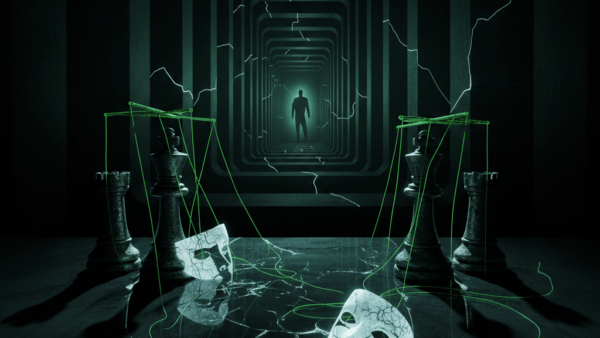
In 2001, a mid-level manager at a U.S. financial firm was promoted to department head. Within six months, his team’s anonymous feedback described him as...
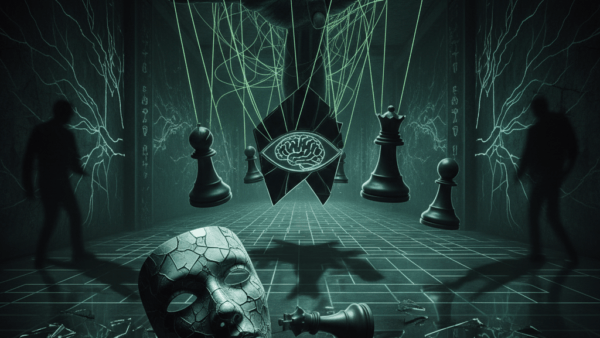
The Invisible Architecture of Influence In 1961, Yale psychologist Stanley Milgram conducted what would become one of psychology’s most disturbing experiments. Ordinary people, believing they...
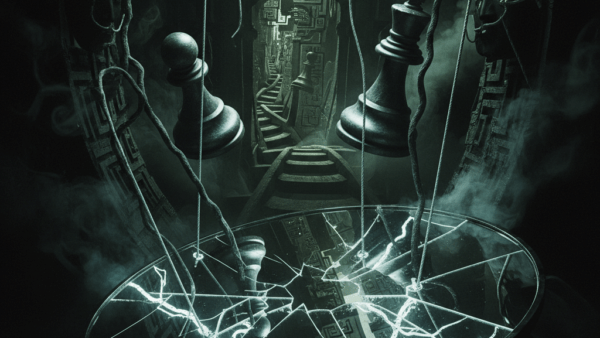
In 1971, psychologist Philip Zimbardo transformed the basement of Stanford University’s psychology building into a mock prison. Within days, ordinary college students assigned as “guards”...