
Psychological Vulnerability: The Cognitive Levers That Manipulation Exploits
When the Mind Opens the Door In 2016, researchers at Stanford analyzed thousands of Facebook posts shared in…
Every day, you make thousands of decisions — what to eat, who to trust, how to interpret a comment, whether to buy a product, or when to end a relationship. You like to think these decisions are rational, based on logic and evidence. But they are not. Your brain takes shortcuts. These shortcuts, known as cognitive biases, are efficient most of the time. But they also create predictable errors in thinking — errors that dark psychology exploits systematically.
Understanding cognitive biases is not just an exercise in self-awareness. It is a critical self-defense skill. Manipulators know how your brain is wired to misfire. They use that knowledge against you. By learning to recognize your own cognitive biases, you can close the doors through which manipulation enters.
Cognitive biases are systematic patterns of deviation from rationality or objective reality. They are mental shortcuts (heuristics) that your brain uses to process information quickly. In ancestral environments, these shortcuts were adaptive: spotting a pattern quickly could mean escaping a predator or finding food. But in modern, complex environments — especially social environments — these same shortcuts lead to predictable errors in judgment.
Cognitive biases affect how you perceive information, remember events, form beliefs, make decisions, and evaluate others. They operate below conscious awareness. You do not know you are biased. You simply feel certain that you are right.
In the context of dark psychology, cognitive biases are the vulnerability points in human cognition. Manipulators design their tactics to trigger specific biases, leading you to conclusions that serve them, not you.
Manipulators do not need to force you to believe something false. They simply need to present information in a way that triggers your natural biases. Your brain will do the rest of the work — jumping to conclusions, filling in gaps, and confirming what it already suspects.
Here are the most important cognitive biases for understanding manipulation vulnerability:
What it is: The tendency to search for, interpret, and remember information that confirms your pre-existing beliefs while ignoring contradictory evidence.
How manipulators exploit it: Once a manipulator plants a simple belief — “your partner is hiding something,” “you are difficult to love,” “this group is dangerous” — you will unconsciously seek evidence that confirms it. The manipulator does not need to prove the claim. They just need you to believe it enough that you will confirm it yourself.
Example: A gaslighter tells you that you are “too sensitive.” Now, every time you react emotionally to anything, you think, “See? I really am too sensitive.” You ignore the times you were appropriately responsive or the times the provocation was real.
Defense: Actively seek disconfirming evidence. Ask: “What would disprove this belief?” Before accepting a negative claim about yourself, ask: “Is there another explanation?”
What it is: The tendency to judge the likelihood or importance of something based on how easily examples come to mind. Vivid, recent, or emotionally charged events feel more common and significant than they actually are.
How manipulators exploit it: Manipulators flood your attention with dramatic, emotional examples. They tell vivid stories of betrayal, danger, or victimhood. These stories stick in your mind. Later, when you evaluate your own situation, those vivid memories make certain outcomes feel likely — even when statistically they are not.
Example: A cult leader shares graphic stories of how “the outside world” persecutes members. These stories are vivid and emotional. When you later consider leaving, the availability of those horror stories makes the outside world seem far more dangerous than it actually is.
Defense: Ask for statistics, not just stories. Compare the vivid examples to base rates. How common is that outcome really? Seek calm, factual information alongside emotional narratives.
What it is: The tendency to continue investing in something — time, money, energy, emotion — simply because you have already invested resources, even when continuing is irrational.
How manipulators exploit it: Manipulators encourage you to invest heavily early: time, favors, emotional vulnerability, financial support. Once you have invested, they know you are less likely to leave. “I’ve already given five years to this relationship.” “I’ve already lent them so much money.” “I’ve already sacrificed my career for this group.” The past investment traps you.
Example: A narcissistic partner demands increasing sacrifices. You comply because you have already sacrificed so much — leaving would mean admitting those sacrifices were wasted. The manipulator counts on this logic.
Defense: Ask only: “Given what I know now, would I start investing in this today?” If the answer is no, the sunk costs are irrelevant. Past investments do not justify future losses.
What it is: The mental discomfort experienced when holding two contradictory beliefs, values, or perceptions. The brain resolves this discomfort by changing one of the beliefs — often the one that is more accurate but more painful.
How manipulators exploit it: Manipulators create situations where you must either (a) believe that you are a good, smart person who has made a terrible mistake, or (b) believe that the manipulator is actually fine and the situation is normal. Most people choose (b) because (a) is too painful.
Example: You have invested years in a relationship with an abuser. The dissonance: “I am an intelligent, capable person” vs. “I have been systematically exploited.” Resolving this dissonance by believing “maybe it wasn’t that bad” is easier than facing the painful truth.
Defense: Name the dissonance explicitly. “I feel uncomfortable because two truths are colliding.” Allow yourself to sit with discomfort rather than resolving it prematurely. Seek external perspectives.
What it is: The tendency to be more confident in your judgments, knowledge, or abilities than is objectively warranted. People consistently overestimate their accuracy.
How manipulators exploit it: Manipulators encourage your overconfidence. They flatter your intelligence, your ability to spot lies, your immunity to manipulation. Why? Because overconfident people do not check their assumptions. They do not seek second opinions. They walk into traps because they believe they would never fall for manipulation.
Example: “You are too smart to be manipulated.” This flattery feels good — and stops you from asking critical questions or seeking outside perspectives.
Defense: Cultivate intellectual humility. Assume you could be wrong. Seek disconfirming evidence. Ask trusted others: “What am I missing?”
What it is: The tendency to see past events as having been predictable, after they have occurred. “I knew it all along.”
How manipulators exploit it: After manipulating you, the manipulator rewrites history. “I told you that would happen.” “You should have listened.” This makes you feel foolish and more dependent on the manipulator’s “superior” judgment going forward.
Example: After a failed investment a manipulator encouraged, they say, “Anyone could see that was risky. I’m surprised you didn’t.” In reality, they encouraged it. But hindsight makes you doubt your memory.
Defense: Document decisions and predictions before outcomes are known. Keep a journal of what you believed and why. Review it after outcomes to distinguish genuine foresight from hindsight bias.
What it is: The tendency to draw different conclusions based on how information is presented (framed), rather than on the information itself.
How manipulators exploit it: Manipulators frame choices to make the desired option seem safe, and the alternative seem dangerous. “If you stay, you are safe. If you leave, you will be alone forever.” The same reality — leaving could lead to new connections — is framed as catastrophic loss.
Example: A controlling partner says, “I am the only one who truly loves you.” This frames leaving as losing all love, rather than gaining the possibility of healthier love.
Defense: Reframe the situation deliberately. Ask: “How would someone neutral describe this choice?” Generate multiple frames before deciding.
You cannot eliminate cognitive biases. They are built into how human brains work. But you can reduce their power:
| Strategy | How to apply it |
|---|---|
| Slow down | Biases operate in fast, intuitive thinking. Deliberate, slow thinking corrects them. |
| Seek disconfirmation | Actively ask: “What would prove me wrong?” |
| Use checklists | Before major decisions, run through common biases. Am I falling for sunk cost? Confirmation bias? |
| Consult outsiders | People outside the situation are less biased. Ask for their perspective. |
| Write it down | Document your reasoning before outcomes. Hindsight bias cannot distort a written record. |
| Learn the biases | Simply knowing that biases exist reduces their power. Name them when you spot them. |
Cognitive biases are not signs of stupidity. They are features of normal human cognition — efficient shortcuts that sometimes lead us astray. But in the hands of a manipulator, these predictable errors become weapons. The manipulator does not need to change reality. They only need to trigger your biases, and your brain will distort reality for them.
The defense is not to eliminate bias — that is impossible. The defense is awareness. When you know how confirmation bias works, you can deliberately seek disconfirming evidence. When you recognize the sunk cost fallacy, you can ignore past investments and ask only about the future. When you understand cognitive dissonance, you can tolerate discomfort rather than resolving it with self-deception.
In the battle against dark psychology, knowledge of your own mind’s vulnerabilities is your strongest shield. Cognitive biases are not your enemy — they are your warning system. Learn to hear their alarms.
When the Mind Opens the Door In 2016, researchers at Stanford analyzed thousands of Facebook posts shared in…

When Your Mind Becomes Your Enemy: The Hidden Architecture of Flawed Thinking In 2008, Bernie Madoff’s $65 billion…

In 2008, financial advisors across Wall Street watched as intelligent, successful clients made catastrophic investment decisions. Despite clear…

When the Mind Opens the Door In 2016, researchers at Stanford analyzed thousands of Facebook posts shared in the final weeks of the U.S. presidential...

When Your Mind Becomes Your Enemy: The Hidden Architecture of Flawed Thinking In 2008, Bernie Madoff’s $65 billion Ponzi scheme collapsed, devastating thousands of investors...
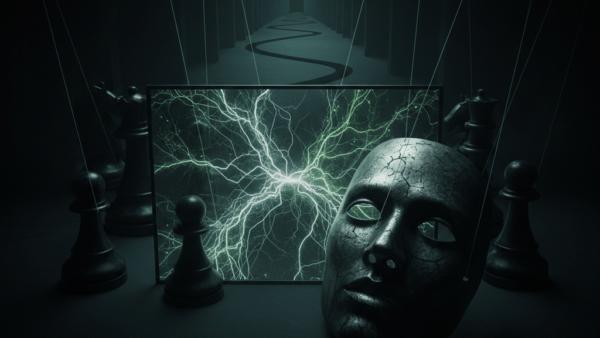
In 2008, financial advisors across Wall Street watched as intelligent, successful clients made catastrophic investment decisions. Despite clear warning signs, these investors doubled down on...